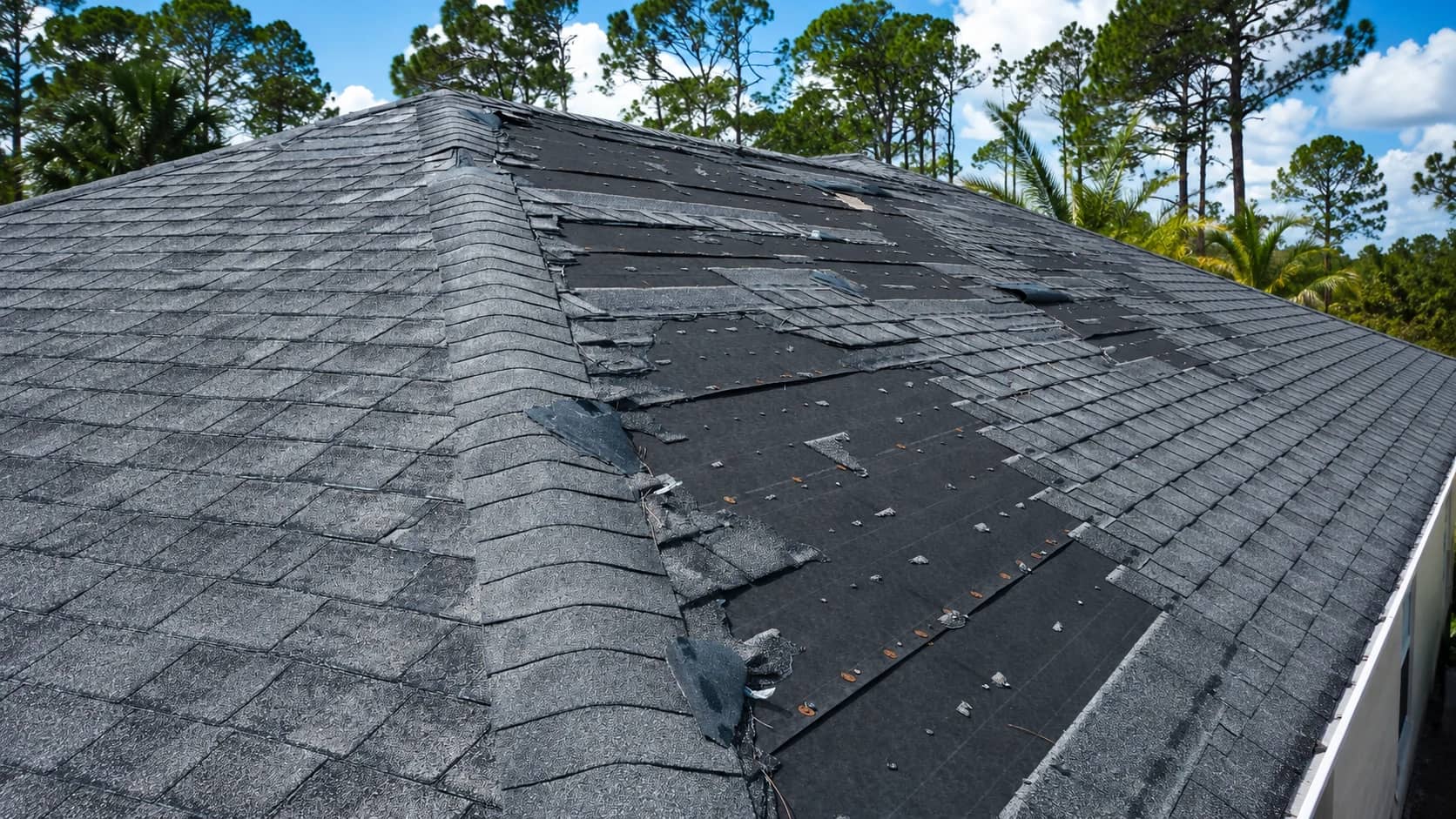
What to do after a storm hits your roof — the first 24 to 48 hours.
How you respond in the first two days after a storm can affect your claim, your repair timeline, and how much comes out of your pocket. Here's the sequence that matters.
Free inspection. Serving Wilmington and coastal NC.
Before you do anything else.
Safety First
Do not go on the roof yourself.
After a major storm, structural integrity is unknown. Wet surfaces, wind-loosened panels, and debris make rooftop access dangerous without equipment and experience.
Document First, Clean Later
Photograph everything before touching it.
Interior water intrusion, exterior shingle damage, fallen debris — all of it. Insurance adjusters need pre-cleanup documentation. Moving or removing debris before photos can complicate your claim.
Eight things to do in the first 24 hours after a storm.
01
Check your interior first
Walk every room and look for ceiling stains, bubbling paint, or active dripping. Mark the spots. Check the attic if you have safe access — wet insulation or daylight visible through the decking are immediate red flags.
02
Photograph all exterior damage from the ground
Walk the perimeter of your home. Use your phone at maximum zoom. Capture missing shingles, dented gutters, damaged soffits, and any debris that landed on the roof. Date-stamp the photos.
03
Check and clear gutters if safely reachable
Clogged gutters after a storm force water against the fascia and into the soffit. If you can safely reach gutters from the ground with a ladder, clear visible debris. Don't use a ladder on saturated ground.
04
Place buckets or towels for active leaks
If water is entering the home, contain it. Don't assume a small drip will stop on its own. A slow interior leak left overnight can cause significant secondary damage.
05
Call your roofing contractor
Get a professional inspection scheduled before the insurance adjuster arrives. Your contractor can document the full damage scope and be present at the adjuster visit.
06
Call your insurer and open a claim
File the claim as soon as you've completed basic documentation. In NC, most policies require filing within 12 months of the storm event. Don't wait.
07
Take notes on the storm
Record the date, approximate time, storm name if applicable, observed wind or hail conditions, and any NOAA alerts. This timeline supports the claim.
08
Do not authorize permanent repairs before the adjuster visits
Temporary tarping and emergency containment are appropriate. Full repairs before the adjuster documents the damage can reduce your settlement.
If there's open exposure — tarp it. Here's what that means.
A tarp over an open hole is not a repair — it's mitigation. Insurers expect and encourage it. Delaying temporary protection while waiting for the adjuster can result in 'secondary damage' exclusions, where interior damage caused by additional water intrusion after the storm is denied because you didn't take reasonable steps to prevent it.
Emergency tarping serviceImportant
Emergency tarping is typically covered under your homeowner policy as part of the loss. Keep all receipts. Document the tarp installation with photos.
What not to do in the first 48 hours.
Don't sign anything immediately
Door-to-door contractors appear fast after storms. Don't sign contracts or assignments of benefits on the spot. Get multiple opinions.
Don't accept the first settlement number as final
Insurance first estimates often miss items. You have the right to supplement with contractor documentation.
Don't make permanent repairs before the adjuster
Fixing the roof before the adjuster arrives removes evidence and can reduce your payout.
Don't assume no visible exterior damage means no claim
Hail damage is often invisible from the ground. Wind damage to flashing and seals can cause leaks months later. Get on the roof before concluding there's nothing to claim.
What homeowners ask us after a storm.
How long do I have to file a storm damage claim in NC?
What if I already cleaned up or made repairs?
Can I get emergency tarping covered by insurance?
What if a tree fell on my roof?
Should I call my insurance or my contractor first?
Storm hit recently? Get eyes on your roof before anything else moves.
We document the full damage scope, give you a straight assessment, and — if needed — attend the adjuster visit with you. The inspection is free.
More on storm damage, claims, and emergency services.